The Teen Patti
Teen Patti Overview
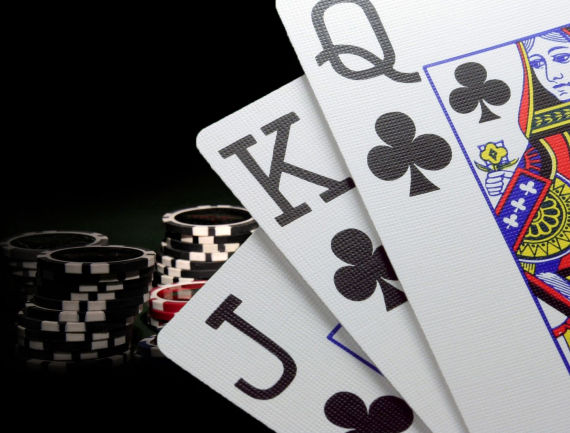
Teen Patti is a card game for gambling. The South Asian country of India is where Teen Patti first gained popularity. With poker overtones, it has its roots in the English game of three-card brag. In certain places, it is also known as flush or flash.
The game has its benefits and is related to Janmashtami, the festival of Krishna's birth, according to cultural factors.
Batting
Looser versus tight play
In adolescent patti, loose and tight allude to a player's overall propensity to play hands through the opening round or to immediately fold them. A "tight" player will frequently decide to fold lesser cards, whereas a "loose" player may bet on more of these hands and hence play more hands to the showdown. However, there is no widely acknowledged threshold in terms of a ratio or percentage of hands played.
Entry Fee
Typically, an ante or boot amount is placed on the table (referred to as the pot). This ante can take the shape of either each player putting in an equal amount or one person putting in a bigger amount (often in a rotation).
An ante is a mandatory wager in which each player must put down an identical amount of cash or chips before the deal can be made. This is frequently either a single unit (a one-value or the smallest value currently in play) or some other tiny sum; it is also typical for this to represent a percentage, such as half or one-fourth of the minimum bet. Each player has an incentive, however little, to play the hand rather than throw it in when the initial bet reaches them because to the ante that each player pays to guarantee that a player who folds every round would lose money (albeit gradually).
Antes dissuade play that is too tight. Without the ante, a player who hasn't paid a blind can throw in his hand for free; however, the ante makes doing so too frequently a losing strategy. With antes, more players remain in the hand, increasing the pot size and resulting in more engaging play.
It is usual for the players to agree that the dealer (or another position relative to the dealer or the button) supplies the ante for each player in games where the active dealer changes each round. This makes betting easier but may result in small discrepancies if additional players join and depart. When this happens, the player may receive a specific button notifying them that they must post an ante (often known as "posting") when they return.
Post
A player who is temporarily away from his seat (e.g. for drinks or a restroom/bathroom break) and misses antes is also required to post to re-enter the game. For the subsequent hand they will play in, they must provide the appropriate ante to the pot. The sum that must be posted in this scenario is equal to the ante amount at the moment the player missed them.
In most cases, if the player who would normally post also happens to be in the ante, posting is not necessary. This is due to the fact that there isn't the benefit of playing numerous hands before having to pay ante, which would normally be achieved by skipping the ante. Therefore, it is normal for a novice player to reserve a seat and then wait a few hands before joining a table, or for a seasoned player to wait a few hands until the ante comes back around before entering the pot and avoiding the post. For the same reason, a player may only accumulate one ante; previous missed antes are eliminated when the ante returns to that player's betting area. The player was never in a position to profit from missing the antes, thus they were forced to sit.
Blind
A forced wager put into the pot by one or more players prior to the deal, known as a blind or blind bet, is typically done to mimic bets made during play. The most popular way to employ blinds as a betting structure is with two blinds: the small blind, which is placed by the player who comes after the dealer, and the large blind, which is placed by the player who comes after him or her. The predominant structure of play is this two-blind arrangement, occasionally with antes. Only one blind (a half or full stake) may occasionally be utilised; this is frequently done informally by the dealer as a "price of winning" the previous hand.
Players may choose to play blindly and add an optional blind bet to the pot in addition to the mandatory blind bet. Blind players are permitted to wager at least half of the level being wagered by a player who can be seen. Players who can be seen must wager an amount at least twice as much as the blind player is currently wagering.
Some players place a cap on the number of times a player may bet blind; for instance, a player may bet blind once every three turns or once every two rounds.
Call and raise
The regular betting begins with the next player contributing his wager amount to the pot after the ante and any required blind bets.
The call and the rise, both of which are typically referred to as the total bet, may be broken down into two parts. Each participant must make a wager that is at least as much as the one made by the person before them, with the opportunity to increase the wager. This wager then replaces the previous wager as the current level. The raise usually has a limit, so the total stake (including the call and the raise) cannot be more than twice as much as the previous player's wager. Additionally, the wager must be made in even numbers (2, 4, 6, 8, etc.), particularly if there is still one Blind player left in the game. It's because the blind player only places half the usual wager, and odd numbers cannot be divided in half.
For More Content Like This Follow Us
Post a Comment